
Jules Podell The Copacabana Legend
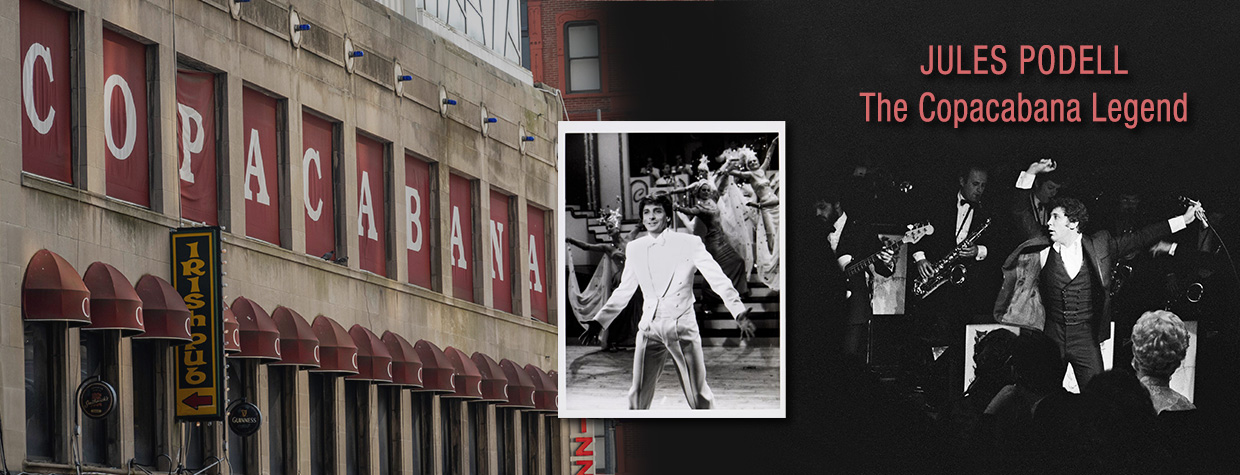
The Copacabana nightclub opened its doors in October 1940, with Monte Proser as the primary owner. Frank Costello, one of the most powerful and influential crime bosses in American history, was believed to have a stake in the club. Jules Podell and Jack Entratter managed the club. The club's theme featured a mix of Latin and tropical influences, contributing to its rise as one of the most famous nightclubs in the world.
By 1950, any trace of Monte Proser had disappeared, and the Copacabana was entirely associated with Jules Podell. Rumors suggested that Frank Costello decided that Jules Podell should take charge, eventually becoming the club's sole owner.
The Copacabana hosted many renowned performers, including Eddie Fisher, Tony Bennett, Frank Sinatra, Dean Martin, Jerry Lewis, Jimmy Durante, Paul Anka, Nat King Cole, Sammy Davis Jr., Sid Caesar, Steve Lawrence, Joe E. Lewis, Desi Arnez, Peggy Lee, Tom Jones, Diana Ross and the Supremes, Wayne Newton, Joan Rivers, Buddy Hackett, and the Temptations. A significant attraction of the club was the Copa Girls, who gained fame as some of the most beautiful showgirls in New York.
Sinatra notably broke the color barrier at the club, creating crucial opportunities for Sammy Davis Jr.'s career. In 1948, at the Copa, Dean Martin and Jerry Lewis became a star comedy duo for eight years.
No nightclub in New York could match the lineup of headline performers and stars on and off stage. It was truly the nightclub of show business.
The Copa was also acclaimed for its French and Chinese cuisine and was regarded as having some of the best food in town. Jules Podell ensured that each dish was prepared perfectly and maintained an immaculate kitchen and staff.
Jules sat at a small table near the entrance, running the club from that spot. A rap on the table from his large ring would send the nearest captain and staff scurrying, while a double rap would signal an act to be on edge, indicating that a joke had fallen flat or a performance was running long.
The 1970s brought negative changes to the glamorous nightclub scene. Customers became satisfied with DJs spinning records, leading to the decline of the Copa. On September 27, 1973, Jules Podell passed away, leaving behind the incredible legacy of the Copacabana.
In 1978, Barry Manilow's song "Copacabana" brought renewed attention to the club and its remarkable history. The song's notable verse is, "Music and fashion were always the passion at the Copa."